1,993
RNC corridor segments
Understanding the infrastructure, operational constraints and system characteristics that shape Manzanillo's logistics resilience.
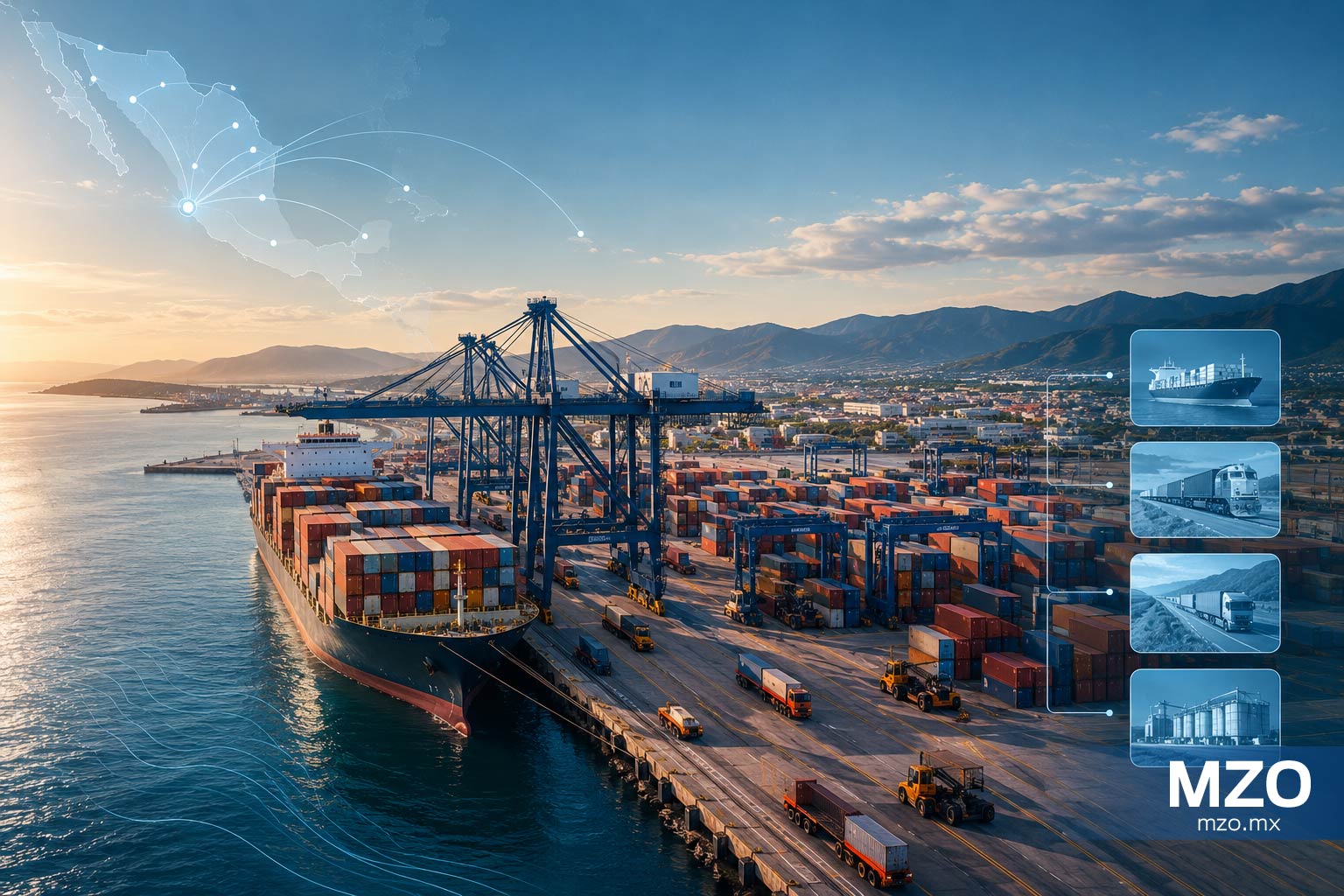
This report is part of the MZO Intelligence platform and presents an editorial analysis based on regional context, public information and strategic interpretation.
Manzanillo's logistics resilience depends on more than the capacity of any individual facility. It emerges from the interaction between port activity, inland connectivity, physical infrastructure, operational interfaces and the system's ability to address constraints as activity evolves.
Manzanillo supports a large and interconnected logistics system whose activity extends from the maritime gateway into inland transportation networks and regional markets.
Road, rail and access infrastructure provide the physical foundations for continuity, while multiple operational interfaces must remain coordinated across the logistics system.
The available evidence supports identifying important resilience mechanisms and constraints, but does not provide a single homogeneous measure of current system capacity or utilization.
A small set of indicators provides context for the infrastructure and freight evidence underlying Manzanillo's logistics system.
RNC corridor segments
Analyzed road network
Historical O-D study locations
Context note: These indicators describe observed infrastructure and historical evidence; they are not measures of current logistics capacity or utilization.
Understanding logistics resilience begins with the activity moving through the gateway. Port throughput provides evidence of realized activity, while historical Origin-Destination studies provide additional context on inland freight relationships.
Port throughput provides a measure of cargo activity handled by the gateway over time. It represents realized activity rather than the maximum capacity of the system.
SICT Origin-Destination and Weight studies provide direct observations of freight relationships associated with Manzanillo at selected locations and periods.
The available evidence connects Manzanillo with inland markets and transportation corridors extending beyond the immediate port area.
Evidence note: Port activity represents realized throughput, while historical O-D observations reflect specific survey locations and periods. Neither should be interpreted as a current system-capacity measure.
Logistics continuity depends on coordination across several operational interfaces, from the gateway and terminals to regulatory processes, inland transportation and the markets ultimately served by the system.
Provides the institutional and operational interface through which the maritime gateway connects with the wider logistics system.
Connects maritime cargo operations with the landside transportation system, forming the physical transition between the port and inland logistics network.
Provides the regulatory interface through which cargo movements are subject to customs and other applicable requirements as they enter or leave the country.
Extends the gateway into the inland network through road and rail connections that link Manzanillo with regional markets and logistics corridors.
Connects the transportation system with logistics activities, distribution networks and the economic markets served by the gateway.
Road, rail and access infrastructure provide the physical foundations through which cargo can move between the maritime gateway and inland markets. The available evidence establishes the presence and structure of this network, while its individual capacity and utilization require separate evidence.
The 2025 RNC evidence includes 1,993 analyzed corridor segments representing approximately 767.42 km across the validated network.
The analyzed RNC grouping contains 1,790 segments representing approximately 706.99 km.
The analyzed RNC grouping contains 203 segments representing approximately 60.44 km.
Manzanillo's logistics system also includes rail and multimodal connections that provide additional pathways between the gateway and inland logistics networks.
Infrastructure note: Observed infrastructure provides evidence of physical connectivity and system structure but does not by itself establish freight capacity or performance.
The resilience of a logistics system is tested where activity, infrastructure, information and alternative routing intersect. Several constraints limit how precisely the current system can be assessed.
Sustained or increasing logistics activity raises the importance of maintaining reliable infrastructure, access and coordination across the system.
Impact
Road access and local logistics conditions are important considerations when assessing the resilience of a connected freight system, particularly where infrastructure, access and operational interfaces interact.
Impact
Historical O-D studies provide direct evidence for selected periods and locations, but a complete contemporary Manzanillo-specific freight matrix is not publicly validated.
Impact
Some inland markets are shared with alternative gateways, meaning regional logistics resilience must be understood within a competitive multi-gateway system.
Impact
Manzanillo's resilience is best understood as the result of several interconnected system characteristics rather than a single capacity measure. Connectivity, multimodal options, access improvements, operational coordination and continued infrastructure development can each contribute to maintaining continuity as logistics activity evolves.
Maintaining strong connections between the gateway, inland transportation networks and regional markets expands the system's ability to sustain cargo movement.
Road and rail connectivity provide complementary pathways within the wider logistics system and can support greater flexibility in how inland movements are organized.
Documented infrastructure initiatives addressing port access and regional connectivity can strengthen the physical conditions supporting logistics continuity.
Continued investment and coordinated development can address identified infrastructure and access constraints, while the specific freight effects of individual projects require supporting evidence.
Interpretation note: Resilience is assessed qualitatively through the interaction of activity, connectivity, infrastructure, operational interfaces and documented development initiatives.
Manzanillo's logistics resilience is not defined by a single measure of capacity. It emerges from the interaction between port activity, inland connectivity, multimodal infrastructure, operational interfaces and the system's ability to address constraints. The available evidence supports identifying these mechanisms and constraints, while important limitations remain around current freight attribution and homogeneous operational-capacity measurement.
Primary sources and references supporting this report.
ASIPONA Manzanillo
Port Statistics — January–December 2025
2025
SICT
Estudios de Origen-Destino y Peso — Cuyutlán y San Felipe
2009
SICT
Estudio de Origen-Destino y Peso — Estación Jaluco
2006
INEGI
Red Nacional de Caminos 2025
2025
Continue exploring logistics across the Port of Manzanillo.
Logistics
Explore how Manzanillo functions as a connected logistics system, linking port activity, inland transportation, infrastructure and regional markets across Western Mexico.
Logistics
Understanding the inland markets, transportation corridors and functional logistics relationships connected to Manzanillo.
Logistics
Explore the logistics knowledge base